Free
$0 for individuals
Every feature, Neuro included, with no limits. At home or at work, on Windows and Linux.
Built for embedded developers who code with AI agents: agent alerts, resume after a restart, and your board one tab away. Free for every developer.
Works with Claude Code and Codex · v1.11.0 · Windows 10/11 and Linux · No sign-up
Claude Code or Codex fixes the driver on the left. The board reboots on the right. No window juggling.
Real Claude Code; Codex works the same. The board is simulated in the demo. Waiting time shortened.
With Agent serial access, the agent reads that boot log itself and asks you in the tab (Allow) before it types. How it works
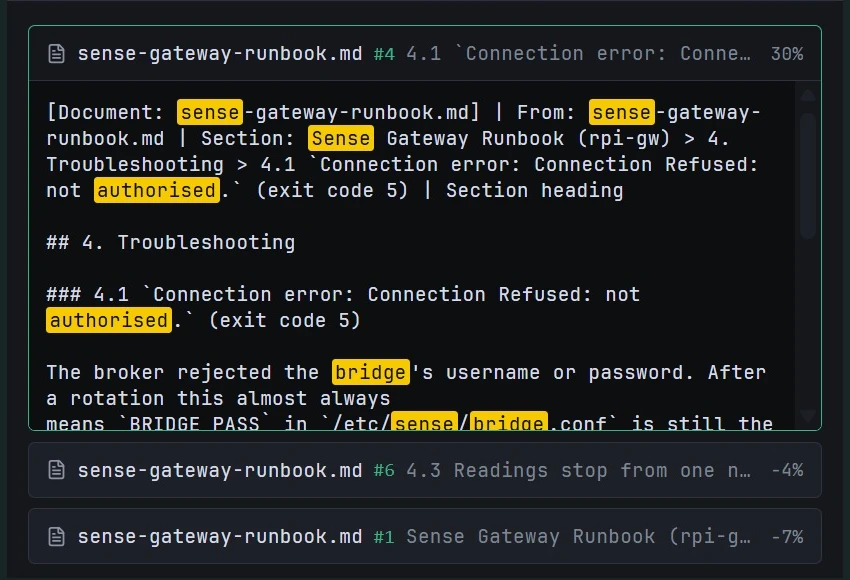
Type @ in any tab and ask. A local model answers from the documents you imported and shows the section it used, on your PC.
Jev, cloud NeuroFlash log search finds the log lines behind a symptom: press Ctrl+Shift+F, switch to Ask and describe it. It runs in the cloud on your own OpenRouter account, shows the estimated cost, and sends nothing until you press Enter. How it works
Console output is often under NDA. NeuroTerm itself sends nothing about your sessions. Local Neuro keeps your prompts and documents on your PC; the cloud options below send only what they say.
Rolling it out to a team? Who needs Commercial
| Terminal output, prompts, documents with local Neuro | Stay on your PC |
|---|---|
| Telemetry and crash reports | None |
| Update check GitHub, on by default, can be turned off | At launch |
| Model downloads Hugging Face; the embedding model downloads automatically when Settings opens with a local model ready | When you pick one |
| NeuroFlash log search your symptom and the lines searched (selection, newest 2,000 lines or a chosen file), secrets redacted, to Jev on OpenRouter | When you press Enter |
| Cloud AI you turn on prompts, terminal text, connection names, imported documents, secrets redacted; idle summaries, the journal and error explanations send automatically | While on |
| Claude Code, Codex they use their own service, as in any terminal, including serial output they read through Agent serial access (MCP) | Their provider |
This is about the app. The website uses no analytics; see the privacy policy.
$0 for individuals
Every feature, Neuro included, with no limits. At home or at work, on Windows and Linux.
$49 per user, per year
For companies of more than 10 employees that roll NeuroTerm out to their staff. The app never checks.